Boat Rental Cala Figuera: Yacht Charters & Coastal Excursions
The southeastern edge of Mallorca looks completely different from the water. I have photographed these sheer limestone cliffs from land for years, but renting a boat in Cala Figuera gives you access to a perspective that footpaths simply cannot provide. This working fishing port has no sandy beach in its center. The historic stone houses and private docks sit directly over deep water. That specific geography makes it an excellent launch point for exploring the surrounding coves.
Book Guided Tours & Activities
Reserve your local guide, boat transfer, or tickets online safely.

 viator
$65.28
viator
$65.28


Navigating the Geography
You need to confirm your GPS coordinates before booking a rental. The name Cala Figuera belongs to two distinct locations on the island. There is a remote pebble beach on the northern Cap de Formentor peninsula, and there is this active maritime harbor in the southern municipality of Santanyí. We are in the south. The northern location bans private cars during the summer and has no commercial harbor. The southern port of Cala Figuera is open 365 days a year with free street parking and active marine services.
The harbor itself splits into two narrow inlets: Caló d'en Busques and Caló d'en Boira. Most rental agencies operate from the stone slipways lining these inlets. You will walk down steep clifftop stairs to reach the water level. The stone steps and boat ramps, locally called escars, are covered in green algae. They are incredibly slippery. I always wear sturdy water shoes and advise everyone against wearing flip-flops near the water's edge.
Choosing Your Vessel: License Rules and Options
Spanish maritime law strictly regulates who can drive a boat. Your options depend entirely on your qualifications and what kind of day you want on the water.
License-Free Speedboats
You do not need a nautical license for small boats. The law restricts these vessels to a maximum length of 5 meters and an engine size of 15 horsepower. They are slow, stable, and designed for hugging the coastline.
The rental staff gives you a mandatory safety briefing, shows you how to operate the outboard motor, and hands you a map of the local anchorages. Prices for a four-hour half-day rental usually sit around €180.00 (~$196.20), while a full eight-hour day costs approximately €280.00 (~$305.20). Fuel is sometimes included in half-day rates, but you pay for what you consume on full-day trips.
Skippered Yacht Charters
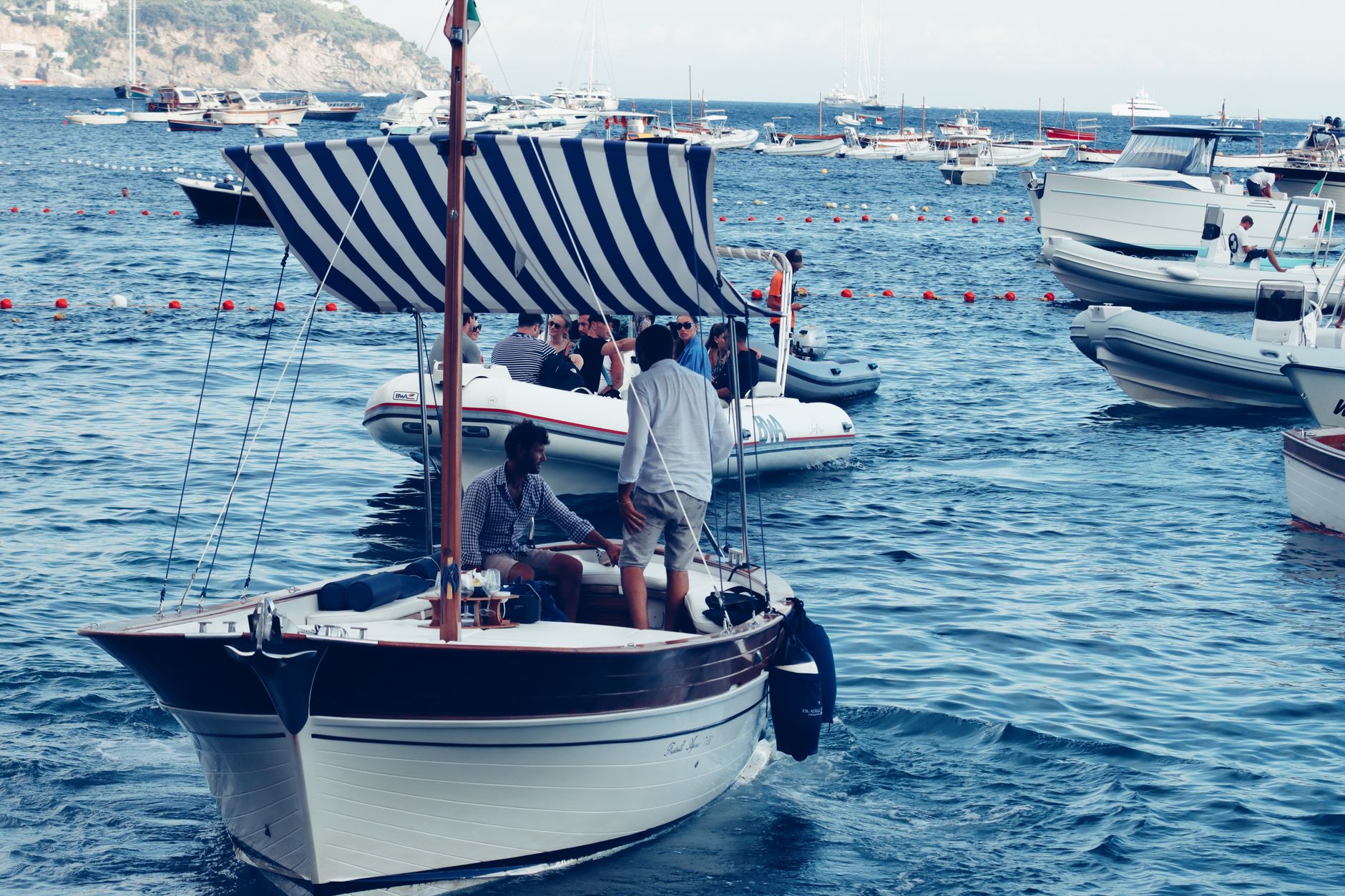
Hiring a local skipper is the better choice for groups wanting to relax or cover longer distances. Local operators like Ocean Charter Mallorca provide larger rigid inflatable boats (RIBs) and motor yachts that require advanced commercial licenses.
Captained coastal boat charters departing from Cala Figuera cruise directly past the world-famous Es Pontàs deep water soloing cliff, offering front-row views of extreme climbers.
The skipper knows the exact depths, the hidden caves, and the safest spots to drop anchor. A private half-day skippered charter generally starts at €450.00 (~$490.50), while full-day excursions range from €750.00 (~$817.50) to €1,200.00 (~$1,308.00) depending on the vessel's size. Ocean Charter Mallorca also organizes morning environmental clean-ups during the July festival, demonstrating their commitment to the local marine ecosystem.
The Southeastern Cruising Route
The coastline running south from Cala Figuera offers some of the clearest water in the Balearic Islands. The sequence of coves creates a natural itinerary for a day on the water.
- Torre d'en Beu and the Open Sea: You pass the 1569 watchtower of sa Torre d'en Beu and its active 1953 lighthouse as you exit the narrow harbor. The water deepens immediately. The swell is usually calm in the morning, making it the best time to run south before the afternoon embat wind picks up.
- Es Pontàs: Roughly two nautical miles south, you reach Es Pontàs. This massive natural stone arch rises directly out of the sea. You can drive a small boat quite close to the rock face, and it is a popular spot for deep-water soloing climbers.
- Cala Santanyí and Caló des Savinar: Just around the headland sits Cala Santanyí, a deep inlet ending in a sandy beach. I prefer dropping anchor slightly further down at Caló des Savinar. It is a secluded, rocky inlet away from the main tourist crowds. You can read more about the underwater topography in my snorkeling page.
- Caló del Moro and S'Almonia: These are the most famous coves in the municipality. During July and August, the footpaths down to the sand are completely overwhelmed with hikers. Arriving by boat allows you to bypass the land congestion entirely. The water here is a bright, striking cyan, and the sandy bottom provides excellent holding for your anchor.
- Cala Marmols: This bay marks the southern limit for most day trips. Bounded by high marble-like cliffs, Cala Marmols requires a grueling five-kilometer hike for land visitors. The isolation makes it peaceful. The contrast between the white sand and the dark rock walls makes this one of the most visually impressive coves we sail to.
Anchoring Rules and Environmental Conservation
You have a legal responsibility to protect the seabed when you rent a boat. The waters around Mallorca are home to vast meadows of Posidonia oceanica. This endemic seagrass acts as the lungs of the Mediterranean and is the primary reason the water remains so transparent.
Dropping an anchor on Posidonia is strictly illegal. The maritime police patrol these coves constantly during the high season. Fines for damaging the seagrass are severe, often exceeding €1,000.00 (~$1,090.00). You must always anchor in clear patches of white sand. If you are unsure about the bottom composition, do not drop the anchor. Protecting teh delicate marine ecosystem is a shared duty for locals and visitors alike.
Practical Logistics for Your Day
A successful boat trip starts with planning your arrival. Public parking in Cala Figuera is free, which is rare for Mallorca. There is unrestricted street parking along the main entrance avenues and a public car park near the harbor entrance. During the peak summer months of July and August, these spaces fill completely. I strongly advise arriving before 10:00 AM to secure a spot without circling the village.
If you book an overnight yacht charter, you are legally subject to the Sustainable Tourism Tax (Ecotasa), just as you would be when booking your accomodation on land. For high season (May through October), this tax is €4.00 (~$4.36) per night, plus 10% VAT, for luxury vessels. Day rentals do not incur this specific overnight tax.
I recommend timing your return to the docks between 4:30 PM and 6:00 PM. This window aligns with the arrival of the traditional fishing fleet. The local fishermen return to Caló d'en Busques to unload their daily catch and mend their nets along the concrete quays. You can return your rental boat, walk up the stone stairs, and secure a table at a certified local restaurant like Bistro Bar Bonavista or Restaurante s'Ona Beach to watch the working port in action.
For more details on the village layout, the seasonal events calendar, and historical context about the fishing industry, read my complete Port Overview.