A Clarification on the Map

I am Rafa Velazquez, and my camera lens spends a lot of time pointing at the water in southeastern Mallorca. The name Cala Figuera confuses many first-time visitors. Standard GPS searches often route drivers to a remote pebble beach on the northern Cap de Formentor peninsula. You do not want that route. This guide is specifically about the active fishing port of Cala Figuera in the southeastern municipality of Santanyí. This port has no sandy beach. The absence of sand protected the village from high-rise hotel development over the decades. The coastline here is sheer rock and deep water. This is the exact reason the area retains its original character.

The harbor splits into two distinct branches shaped like a Y. The left arm is Calo d'en Busques. The right arm is Calo d'en Boira. The Santanyí Town Hall manages this jurisdiction. They keep the port open to the public 24 hours a day, 365 days a year. There are no entrance fees or ticket booths to access the pedestrian boardwalks. You walk right down to the water. The historic core of the village descends steeply down teh clifftop stairs toward private boat docks. These paths do not have vehicle street access.

Overview of the Cala Figuera fishing port and whitewashed houses

Architecture and the Escars

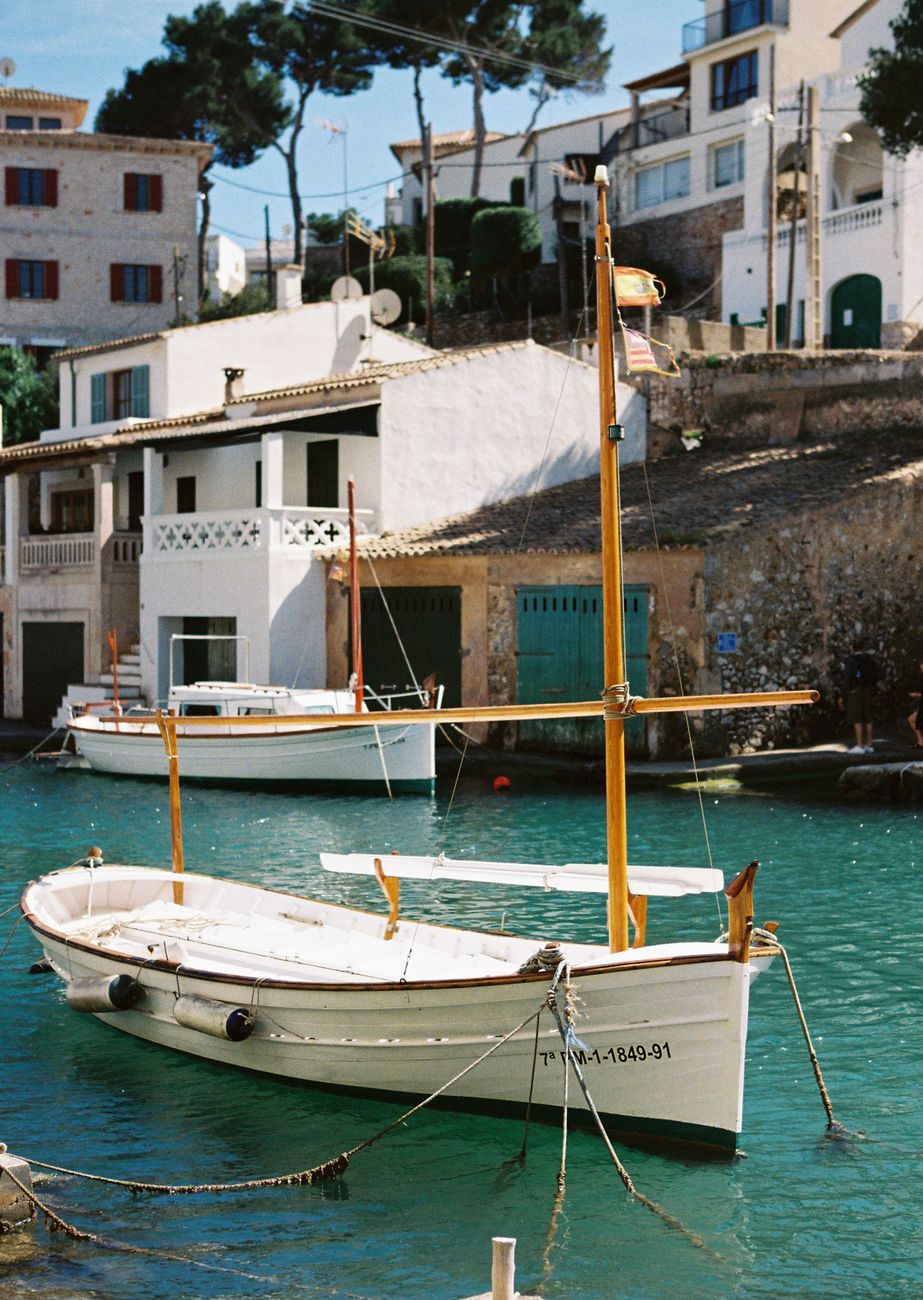
Traditional whitewashed houses line the edges of both coves. These buildings have dark green shutters. They sit directly on the stone foundations above the tide line. The local fishermen use traditional slipways called escars. These are steep stone ramps built directly into the rock. Fishermen winch their small wooden boats out of the water using these ramps to protect them from winter storms.

The stone steps around the escars are covered in green algae. The algae-covered ramps are something you must watch out for. You need sturdy water shoes or slip-resistant footwear to walk along the lower harbor. Flip-flops are a bad idea on this wet stone.

The Daily Rhythm of the Fleet

The port is an active marine environment. The best time to photograph the harbor is between 8:00 AM and 10:00 AM. The morning light hits the whitewashed facades and reflects perfectly on the flat water. The fishing fleet leaves Calo d'en Busques between 6:00 AM and 7:00 AM. By midday, you can watch fishermen mending their nets along the dockside. The fleet returns to unload the daily catch between 4:30 PM and 6:00 PM. The late-afternoon sun creates excellent lighting for clifftop photography during this return window.

The village no longer has a physical, daily indoor retail fish market open to the public. You cannot buy raw seafood directly from the docks. You experience the local catch by walking up to the clifftop dining rooms. My recommendation is to check our Restaurants Guide to find certified local spots like Bistro Bar Bonavista or Restaurante s'Ona Beach. You sit at a table, order the catch of the day, and watch the boats arrive below.

If you want to understand the weekly routine of the village, you should align your visit with the local market schedules. The summer brings a localized market to Calle Sant Pere every Monday from 9:00 AM to 2:00 PM. You can read more about the seasonal stalls and the larger municipal gatherings in our weekly market calendar.

Clifftop Hikes and Watchtowers

Many visitors walk the lower harbor paths and miss the higher elevations entirely. The main clifftop road leads to sa Torre d'en Beu. This watchtower is a defensive structure built in 1569 to spot incoming pirates. An active lighthouse from 1953 sits right next to it. This clifftop area has unobstructed views of the open Mediterranean Sea. A dedicated parking area sits directly adjacent to the trailhead, making the tower easy to access for a quick hike.

Another trail starts roughly four kilometers away near Cala Santanyí. This well-marked walking path leads to Es Pontàs. Es Pontàs is a massive natural stone bridge rising directly out of the sea. It is a mandatory photo spot for anyone bringing a camera to the southeast coast.

Getting on the Water

The rocky inlets of Calo d'en Busques and Calo d'en Boira are deep. The water transparency is very high in July and August. Snorkeling is popular along the edges of the cliffs, away from the active boat lanes. To truly see the scale of the sea cliffs and the natural arch of Es Pontàs, you need a vessel. You can find detailed options and local charters in our Boat Rentals section. A small boat gives you access to hidden coves like Caló des Savinar, which is a quiet rocky inlet excellent for diving away from the summer crowds of Mondragó Natural Park.

Festes de la Mare de Déu del Carme

The middle of July brings the Festes de la Mare de Déu del Carme. This is the main maritime celebration honoring the patron saint of fishermen. The Santanyí Town Hall organizes a multi-day schedule running from July 4 to July 16. The final day includes a solemn mass. The local fishermen carry the image of the saint down to the water, and a maritime procession of decorated boats follows. The harbor esplanade fills with live music, community dinners, and open-air cinema nights during the week leading up to the procession.

Logistics, Transit, and Parking

Public transit to the southeast coast has limitations. The regional TIB network connects the village via Route 516. The bus drops you directly in the harbor village at stop 57029. The route runs through a sequence of stops starting at the La Verge transit hub in Santanyí, passing through Na Ravandella, Son Moja, and Cala Santanyí. Fares range between €4.00 (~$4.36) and €6.00 (~$6.54) for a single card transaction. Departures from the Cala Figuera station run at three-hour intervals during the peak summer period. The earliest direct departure toward Campos is at 6:45 AM on weekdays.

Ride-hailing apps like Uber concentrate their drivers near the Palma airport. Drivers are scarce in the southeastern rural coves. You need to download the Mallorcab smartphone app. This is the officially recommended tool for booking licensed local taxis in the municipalities. You can also call the 24/7 dispatch lines directly, such as Radio Taxi Santanyí (+34 971 657 058). A taxi ride from Cala Figuera to a neighboring town like Portocolom costs around €35.00 (~$38.15) to €45.00 (~$49.05).

Most independent travelers rent a vehicle. All public parking in Cala Figuera is entirely free. The village has unrestricted street parking along the main entrance avenues and a spacious public car park at the harbor entrance. Central spaces fill completely by late morning during July and August. You need to arrive before 10:00 AM to secure a spot without circling the blocks. Do not drive your rental car down the narrow, downward-sloping alleys toward the water. You park on the main street level and walk down the stairs.
Taxes and Winter Closures

The port area is free to wander. Overnight visitors to the Balearic Islands are legally subject to the Sustainable Tourism Tax, known locally as the Ecotasa. Accommodation hosts collect this tax upon arrival. The funds go toward local environmental protection and historical restoration projects.

Children under 16 years old are exempt from this charge. A 50% discount applies to all guests if you stay for nine consecutive nights or more.

The off-season runs from November 1 to April 30. Temperatures cool to a range of 10°C to 16°C. A majority of the local hotels, seasonal restaurants, and coastal activities in Cala Figuera close entirely for the winter. The Ecotasa drops by 75%. The winter months are very quiet. The lighting is soft and the crowds are gone. This is a great time to photograph the architecture and the empty docks if you do not mind the cooler air.